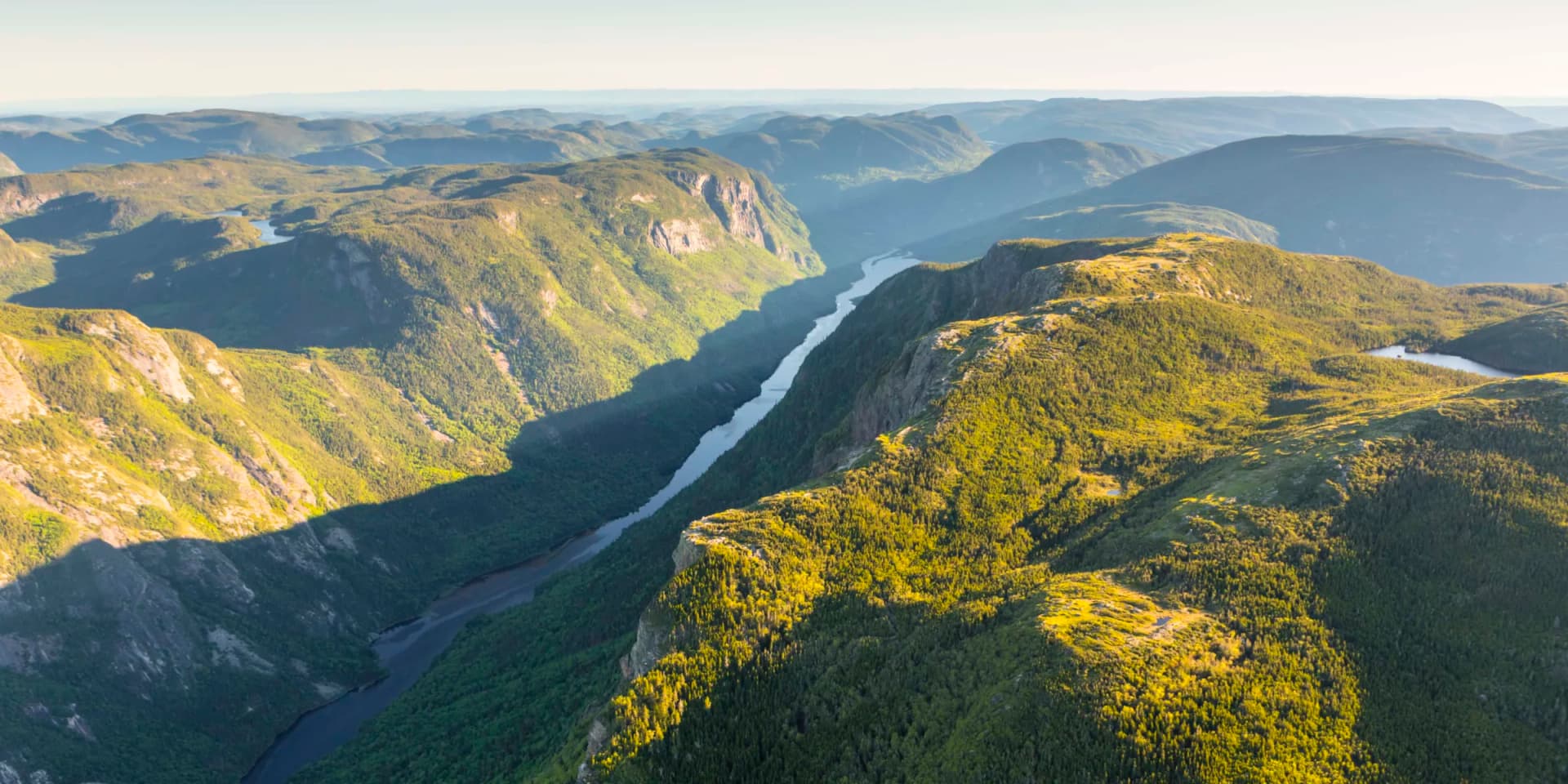
A 3-day Charlevoix itinerary: Baie-Saint-Paul and its arts, La Malbaie and the river, the mountains and Isle-aux-Coudres. The perfect weekend.
Charlevoix has to be earned. The region stretches some hundred kilometres between Petite-Rivière-Saint-François and Saint-Siméon, and every village has its reason to exist. Three days is just enough to grasp the essentials without rushing: one day for arts and villages, one for the river and the table, one for the mountains. Here is a tried-and-tested itinerary, designed for a first stay, that alternates culture, gastronomy and the outdoors.
Day 1 — Baie-Saint-Paul and western Charlevoix
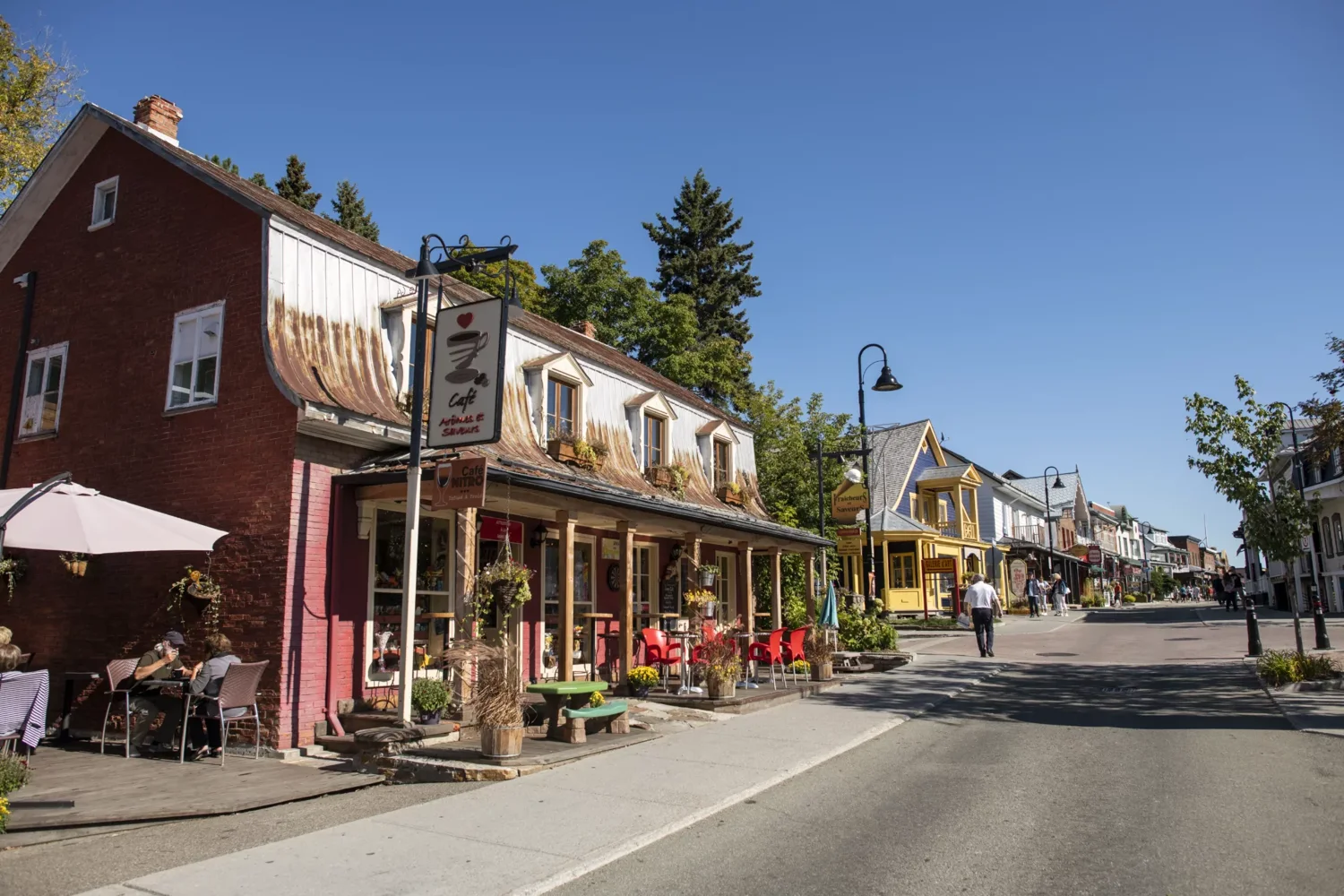 Rue Saint-Jean-Baptiste in Baie-Saint-Paul. Photo: Tourisme Charlevoix.
Most visitors enter Charlevoix from the west, coming down the Route 138 hill. The logical first stop is Baie-Saint-Paul, the region's creative capital. Spend the morning on rue Saint-Jean-Baptiste and its galleries: our article on the galleries and studios of Baie-Saint-Paul walks the whole stretch, from the Musée d'art contemporain to the Iris and L'Harmattan galleries. It is a morning of strolling, shops and cafés.
In the afternoon, two choices depending on your mood. For beer lovers, the Charlevoix microbrewery is an institution. Then, rather than taking Route 138 back, follow the river road (Route 362) towards La Malbaie: it crosses Les Éboulements and Saint-Irénée while hugging the Saint Lawrence from the heights, and it is one of the loveliest scenic roads in Quebec. Allow plenty of time — you stop at every lookout.
The descent into Les Éboulements is especially striking: the road plunges, the river opens up, and you suddenly grasp the geography of Charlevoix — that crater relief where villages cling to the slopes. This is also farm-and-studio country, a good place for a first food stop or an impromptu visit. Arriving in La Malbaie at the end of the day, by the heights rather than the highway, sets exactly the right tone for the rest of the stay.
Day 2 — La Malbaie, the river and the table
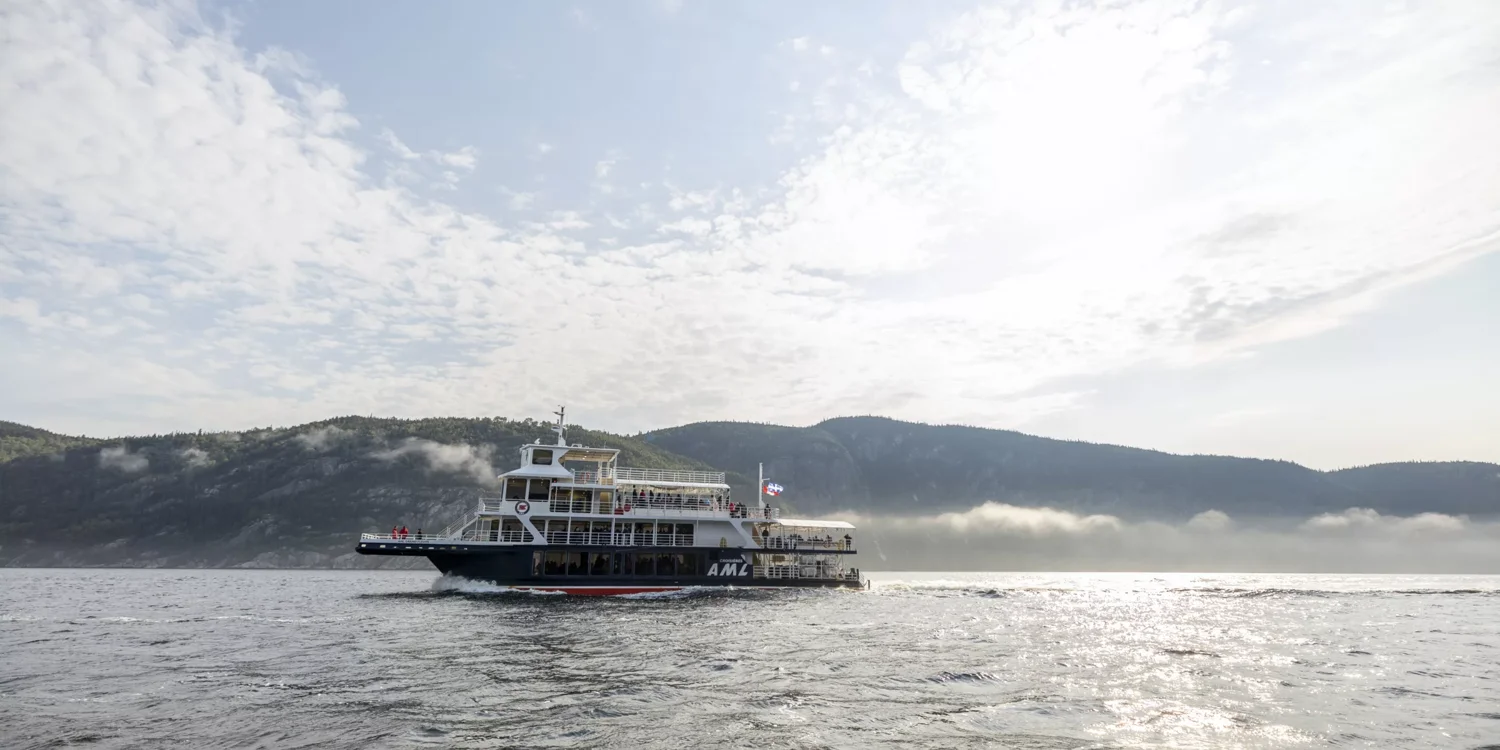 A cruise on the Saint Lawrence, in eastern Charlevoix. Photo: Tourisme Charlevoix.
The second day is lived at the river's edge. Start with bread: the Pains d'Exclamation bakery, in downtown La Malbaie, is the ideal morning stop. If it is a summer Saturday, the farmers' market is in full swing nearby, the perfect chance to stock up on local products.
The rest of the day splits between the river and discovery. The Saint Lawrence riverside walk offers an easy stroll right at the water's edge, ideal for walking off a village lunch. In mid-summer and autumn, a whale-watching cruise from the eastern part of Charlevoix is one of the great moments of a stay — belugas, minke whales and sometimes fin whales come up the estuary to meet the cold waters flowing out of the Saguenay. It is a half-day in itself: factor in the drive east and the time at sea. For the evening, rather than a ranking of restaurants, follow the Flavour Trail, which leads to the artisans, cheese makers and producers who define the region's taste — you build a meal of the terroir, from starter to nightcap.
Day 3 — The mountains and the backcountry
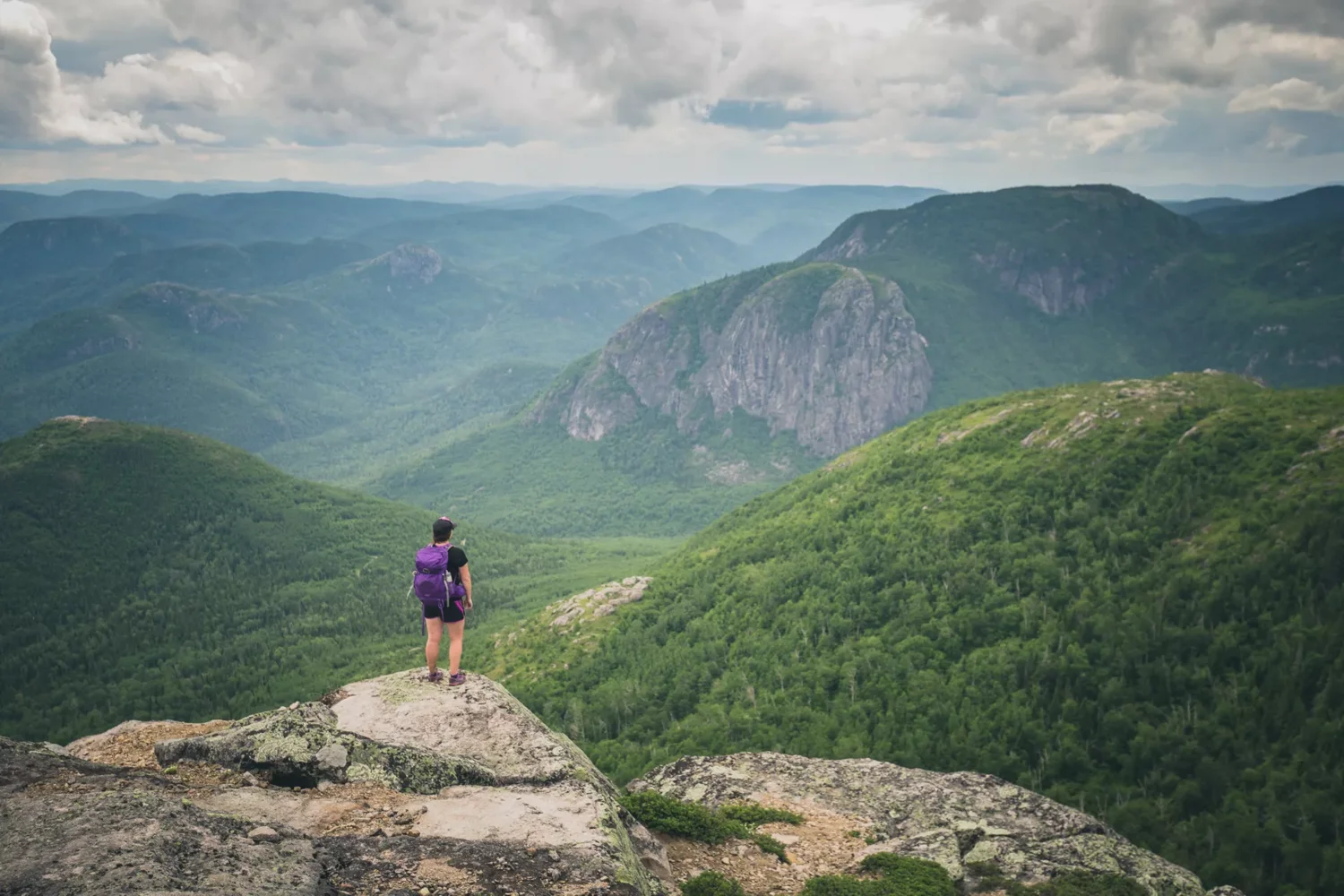 A summit in Grands-Jardins National Park. Photo: Tourisme Charlevoix.
On the third day, you gain altitude. Two national parks compete for attention. Hautes-Gorges-de-la-Rivière-Malbaie National Park offers spectacular gorges, a river cruise and the demanding Acropole-des-Draveurs trail, which rewards the effort with one of the most striking views in eastern Quebec. Grands-Jardins National Park, further north, offers a taiga landscape unique south of the river and the accessible climb up Mont du Lac des Cygnes, doable in a half-day. To choose between the summits, our guide to the essential hikes of Charlevoix compares the options by level and available time.
Whichever park you choose, set out early: both parks' parking lots fill up in high season, and the morning light on the summits is worth the early start. Pack water, good shoes and a windbreaker — at altitude, Charlevoix weather changes fast.
If you prefer flat to mountain, the perfect alternative for a third day is Isle-aux-Coudres, reached by free ferry from Saint-Joseph-de-la-Rive. You circle it by bike (about 23 flat kilometres), between heritage mills and orchards.
Practical tips for organising the weekend
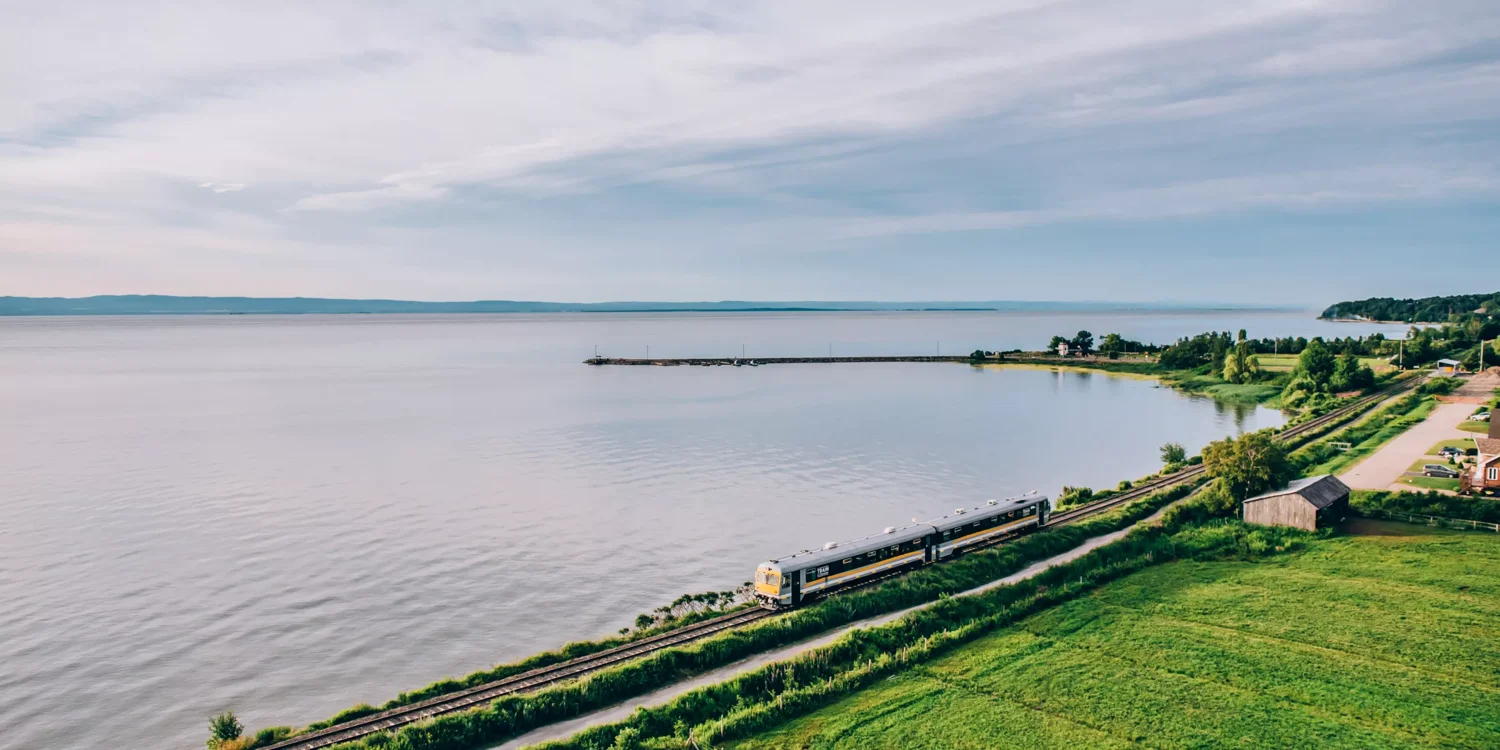 The Train de Charlevoix, along the Saint Lawrence. Photo: Tourisme Charlevoix.
A few markers for a successful stay. Getting there: Charlevoix is about 90 minutes' drive from Quebec City, but you can also arrive by the Train de Charlevoix, which runs spectacularly along the river — an arrival worth the experience in itself.
When to come: summer concentrates the water activities and markets; autumn, from late September to mid-October, turns the region into a painting (see our article on fall colours). Each season has its own itinerary.
With children: several stops on this route suit families, and our Charlevoix with kids guide gathers the activities best suited to younger travellers.
This three-day frame is a starting point, not a rule. Swap a museum morning for an extra hike, trade the whale cruise for a slow day on Isle-aux-Coudres, stretch the weekend to four days if you can — the region rewards a slower pace. Three days is enough to fall in love with Charlevoix; it is rarely enough to feel you have seen it all, and that, almost always, is what brings people back.
To rent a luxury chalet in La Malbaie (Cap-à-l'Aigle), Charlevoix, discover the Le Littoral chalet with heated pool, sauna and spa. Book your stay online or call 418-476-1442.