Chanterelles, boletes, lobster mushrooms: where to forage wild mushrooms in Charlevoix, what the law allows, and the workshops that teach you safely.
In late summer, a discreet tribe slips into the forests of Charlevoix: wicker basket on one arm, curved knife in a pocket, eyes locked on the ground. Mushroom foragers share neither their routes nor their patches — a good chanterelle spot gets passed down through families, almost never through conversation. The region rewards this secrecy handsomely. The boreal forest that tumbles from the mountains down to the St. Lawrence, damp and mossy, produces a parade of sought-after edibles from late June until the first frosts. Here is how to join in without getting lost — or poisoned.
What grows in these woods
Quebec's mushroom season runs roughly from May to October, with two distinct peaks. Spring belongs to morels — fleeting, temperamental, partial to disturbed soil and old burn sites. But abundance arrives in late summer and fall: golden chanterelles hide beneath spruce and fir, boletes push up along forest roads, and the spectacular lobster mushroom — bright orange, firm-fleshed — colours the understory from late summer into September.
These species rank among the most approachable for beginners because they are comparatively easy to recognize. Even so, Quebec is home to thousands of mushroom species, some toxic and a few deadly. The golden rule admits no exceptions: never eat a mushroom you have not identified with absolute certainty. The book "Forêt. Identifier, cueillir, cuisiner" by Gérald Le Gal and Ariane Paré-Le Gal, published by Cardinal, has become the reference for Quebec foragers and makes an excellent starting point, even for readers with only functional French.
Where you can pick — and where you can't
Before heading into the woods, know whose woods they are. Foraging is strictly forbidden in the national parks managed by SÉPAQ: no mushrooms, no berries, no plants. The trails of Grands-Jardins National Park and Hautes-Gorges National Park cross dream chanterelle habitat — look, admire, leave it be. The rule protects fragile ecosystems, and it is enforced.
The forager's legal playground is public land — the vast Crown forests of the Charlevoix backcountry, reached by the logging roads north of La Malbaie and Clermont, where picking for personal consumption is allowed. On private land, which covers most of the shoreline and settled valleys, you need the owner's permission. Two habits complete the forager's code: take only what you will actually cook, and cut the mushroom with a knife rather than ripping out the mycelium that will produce next year's harvest.
Learning with a guide: Forêt Gourmande
The shortest path from theory to a full basket is called Forêt Gourmande. Based at 1350 rue Principale in Petite-Rivière-Saint-François, at the foot of Le Massif, this tree-cooperative venture has made the edible forest its entire subject: a café-boutique built around forest flavours, an open-air interpretation museum, and guided walks in the woods. The 2026 season runs from May 15 to October 31, and the programming follows the forest's own calendar — berries and field flowers in July and August, then mushrooms take over in September with guided identification and foraging outings.
It is exactly the right format for a beginner: a short theory session, then out into the understory hunting for the easily identified edibles, learning to recognize, preserve and cook them. One workshop replaces years of trial and error — and prevents the errors that forgive nothing. September dates sell out quickly; booking online ahead of time is strongly advised.
Mushrooms without the forest: the region's growers
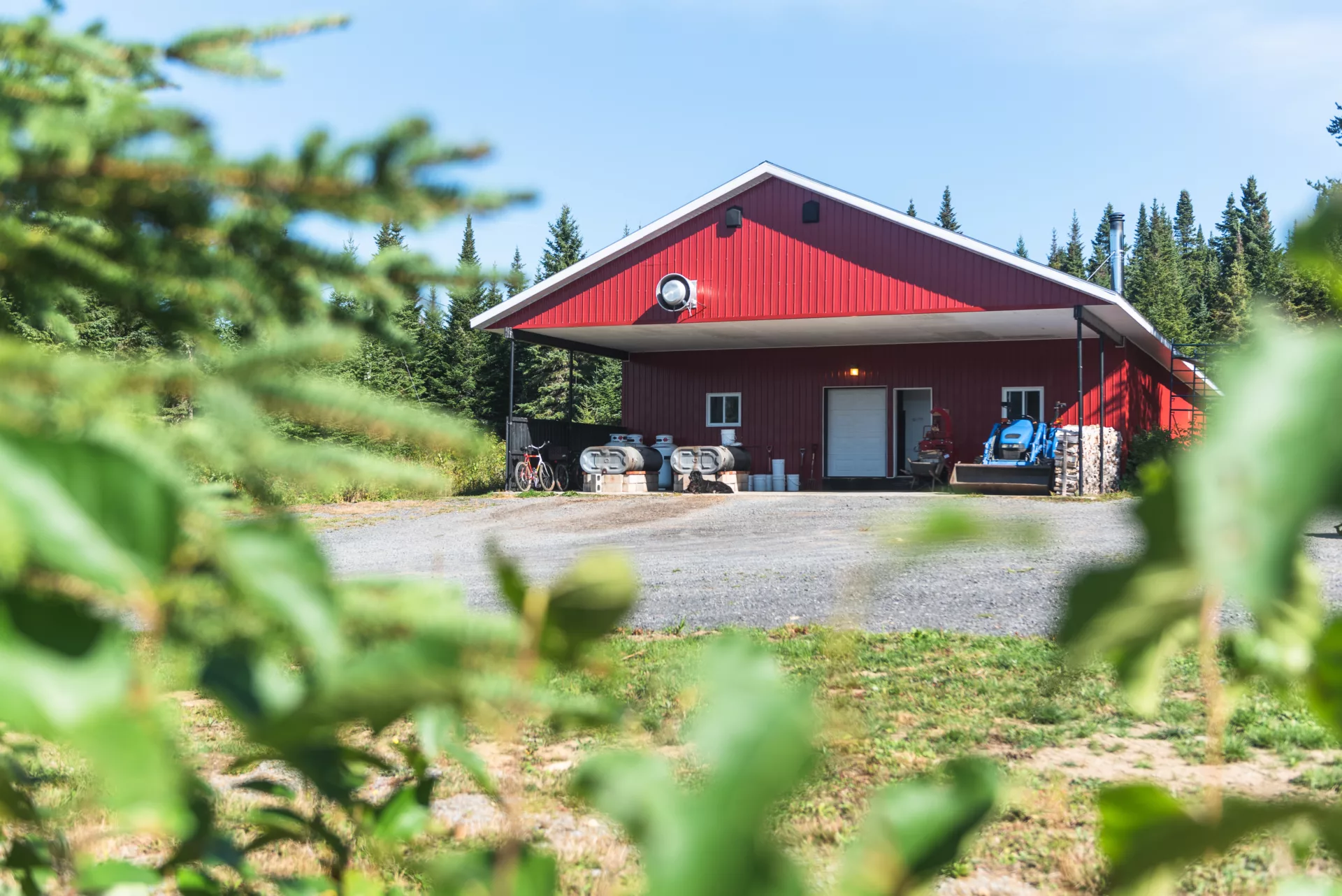
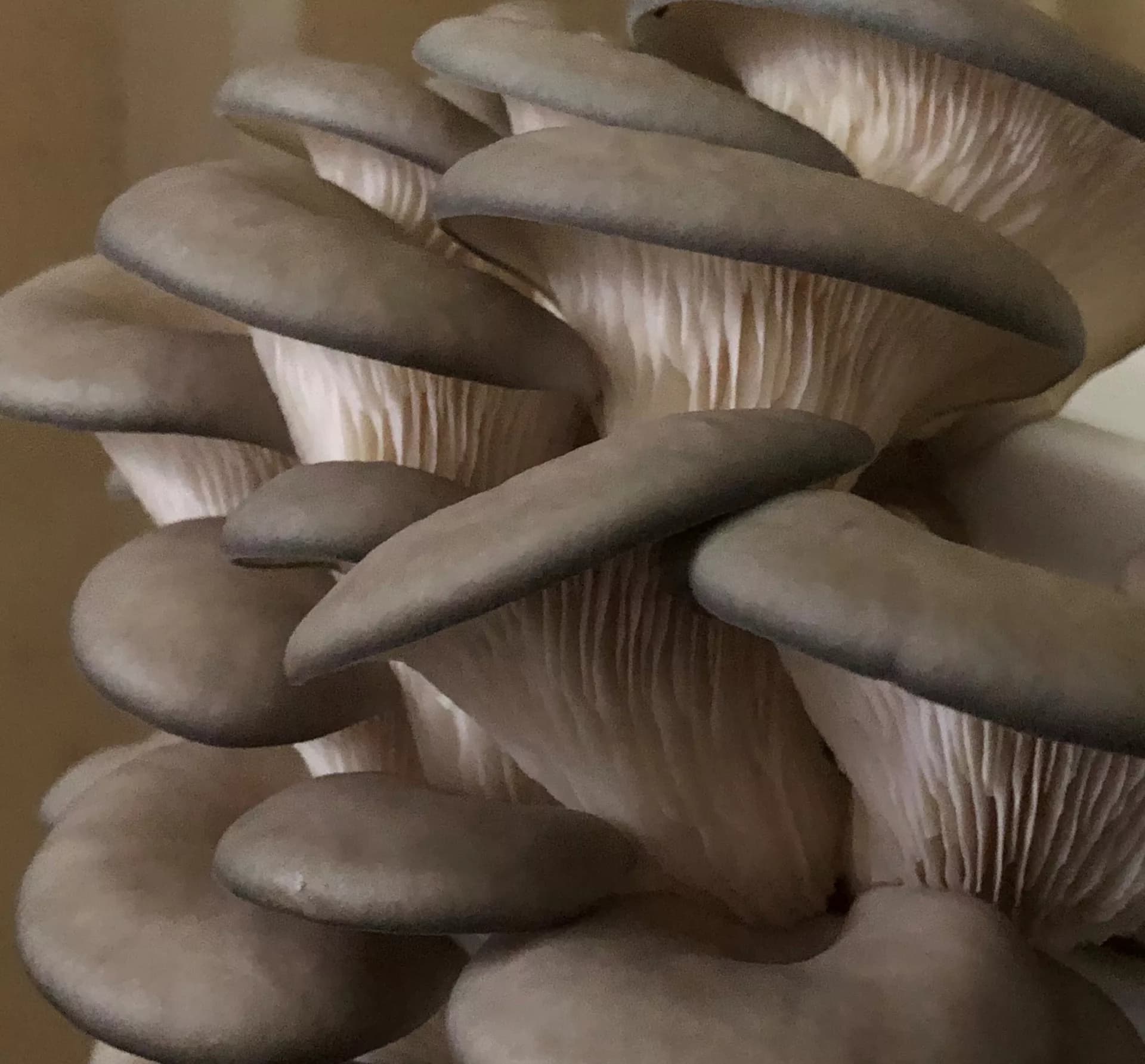
No appetite for bushwhacking? Charlevoix has producers who grow umami indoors. In La Malbaie's Grands-Fonds sector, Champignons Charlevoix has been cultivating grey oyster mushrooms since 2002. The showroom at 770 chemin des Loisirs walks visitors through the production method, and the shop — open year-round — lines up the results: oyster mushrooms marinated in cider vinegar and apple juice, old-fashioned preserves, forest blends. In season, it also stocks wild harvests from local foragers, chanterelles and lobster mushrooms above all.
In Les Éboulements, the Rose et Lion micro-farm, housed in the Jardin des Chefs building, grows lion's mane, shiitake and several oyster varieties. In summer, a self-serve kiosk lets you buy straight from the farm; for the rest of the season their mushrooms appear at the public markets of Petite-Rivière-Saint-François, Baie-Saint-Paul and La Malbaie until mid-October. Our article on Charlevoix's farmers' markets lists the schedules, and the one on cooking local suggests what to do with the haul.
The forager's calendar
If you keep only one game plan: July for a guided introduction to edible plants, late August for chanterelles and lobster mushrooms, September for boletes and mycology workshops, October for the last flushes before the frost — which happen to coincide with the fall colour show. Regulars round out a mushroom day with a stop for berry picking on chemin Snigole in Clermont, for as long as the raspberry season stretches.
One final word of caution, because it bears repeating: when in doubt about an identification, throw it out. No chanterelle is worth a night in the emergency room — and the region's guides will tell you better than anyone that the Charlevoix forest feeds generously those who take the time to learn its rules.
To rent a luxury chalet in La Malbaie (Cap-à-l'Aigle), Charlevoix, discover the Le Littoral chalet with heated pool, sauna and spa. Book your stay online or call 418-476-1442.